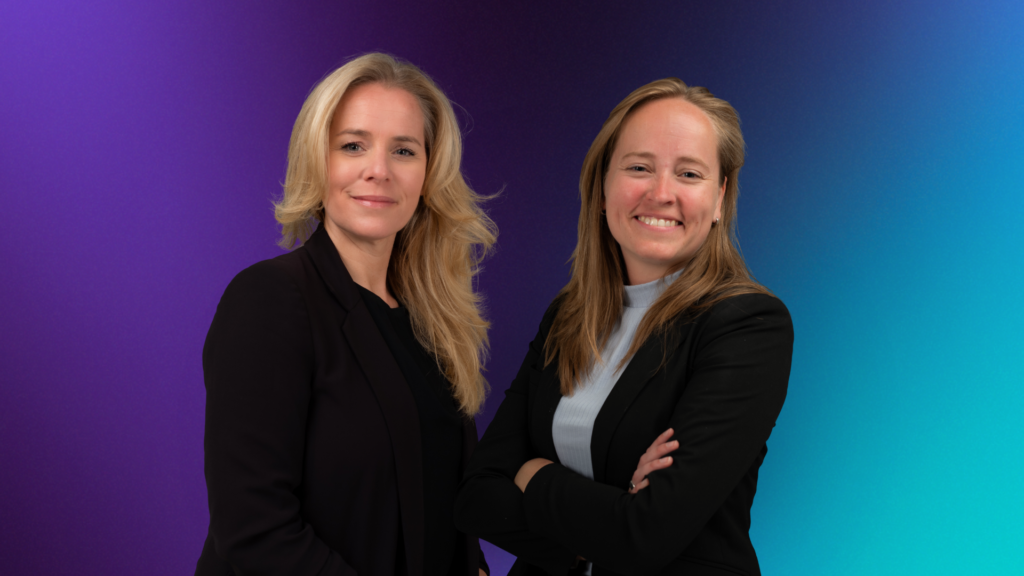
I gave you this book for a reason.
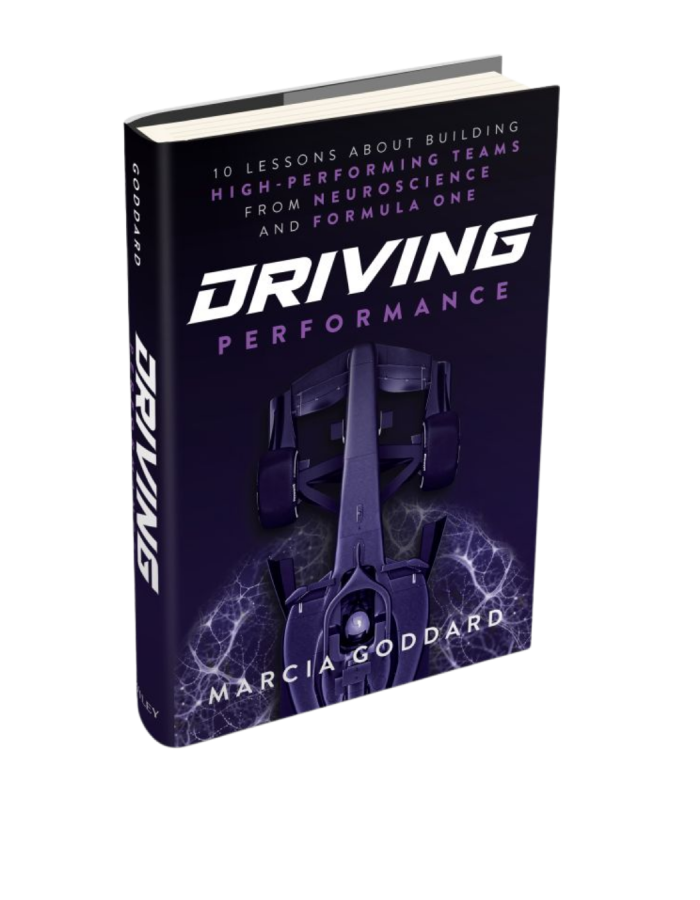
At Diverse-LinQ, I see time and time again that organizations do not distinguish themselves through their strategy, but through how their teams collaborate. In Driving Performance, neuroscientist Dr. Marcia Goddard describes that exact foundation, using Formula 1 as a mirror.
This forms the basis of Off the Map, the game we developed in collaboration with Marcia, among others. This book is where that story begins; below, you can read the rest.
– Elles van Teylingen, founder Diverse-LinQ

Do you recognize the tensions below?
-
Hybrid teams are losing their grip
51% of employees in hybrid teams experience noticeable friction in collaboration and alignment (TNO, 2023). -
Culture is both a top priority and a top challenge
A vast majority of organizations cite culture and collaboration as their single biggest challenge for the coming years (Deloitte, Human Capital Trends). -
Absenteeism and turnover are on the rise
Approximately 1 in 6 employees in the Netherlands struggles with burnout symptoms (CBS), directly impacting business continuity and team performance. -
Diversity remains untapped
Teams with strong cognitive diversity and an inclusive culture are up to 1.8× more innovative (Deloitte / Harvard Business School).
These are not abstract statistics. They are the actual challenges sitting on your desk today—challenges that will only weigh heavier in 2027 as the pressure on talent, technology, and tempo continues to rise.
Why this book ?
Dr. Marcia Goddard is a neuroscientist and psychologist. She has worked with Formula 1 teams and international organizations on the very same question that likely keeps you occupied: what makes the difference between a team that is good and a team that consistently wins under pressure?
In Driving Performance, she translates rigorous neuroscience and the precision of the Formula 1 pit lane into ten key lessons. These are not about working harder, but about working better together. No hustle culture, just behavior that is proven to work with real people in real teams.
What inaction is truly costing you
Team performance may feel like a soft topic, but the invoice certainly isn’t. The cost items below are not hypothetical; they are already on the balance sheet of every organization that doesn’t have its fundamentals in order.
€8,3 billion
Sick Leave & Absenteeism
Work-related absenteeism cost Dutch employers €8.3 billion in 2023, up from €5.1 billion in 2015 (TNO Arbobalans, 2025). Per employee, per sick day, the average cost ranges between €250 and €400.
€4,9 billion
Burn-out
€4.9 billion of that bill is psychosocial in nature—driven by work stress and burnout. The cost per individual case reaches €60,000 to €80,000 (TNO; A.S.R.), with an average absence of 63 working days.
+30%
At least 30% of annual salary
Rising up to 213% for a leadership position. For a manager earning €90,000, that quickly exceeds €150,000.
€10k - €40k
On recruitment and hiring per vacancy
Reaching up to €40,000+ for senior positions (Dutch recruitment benchmarks, 2025/2026).
$12.506
Per employee per year due to miscommunication
According to US research among knowledge workers. 68% of managers lose at least $10,000 per year this way (Grammarly/Harris Poll, 2023).
+36%
Higher profitability
For organizations in the top quartile for ethnic and cultural diversity compared to the bottom quartile; for gender diversity, this figure is 25% (McKinsey, Diversity Wins).
Six different cost drivers. One common root cause: teams that do not feel safe enough to communicate openly, report mistakes, or leverage each other’s perspectives.
The core lessons Marcia outlines in Driving Performance. Clear communication, psychological safety, and trust over control are not soft values. They are the levers you pull to structurally lower these costs.
60 minutes. A measurable insight into your team.
What is Off the Map ?
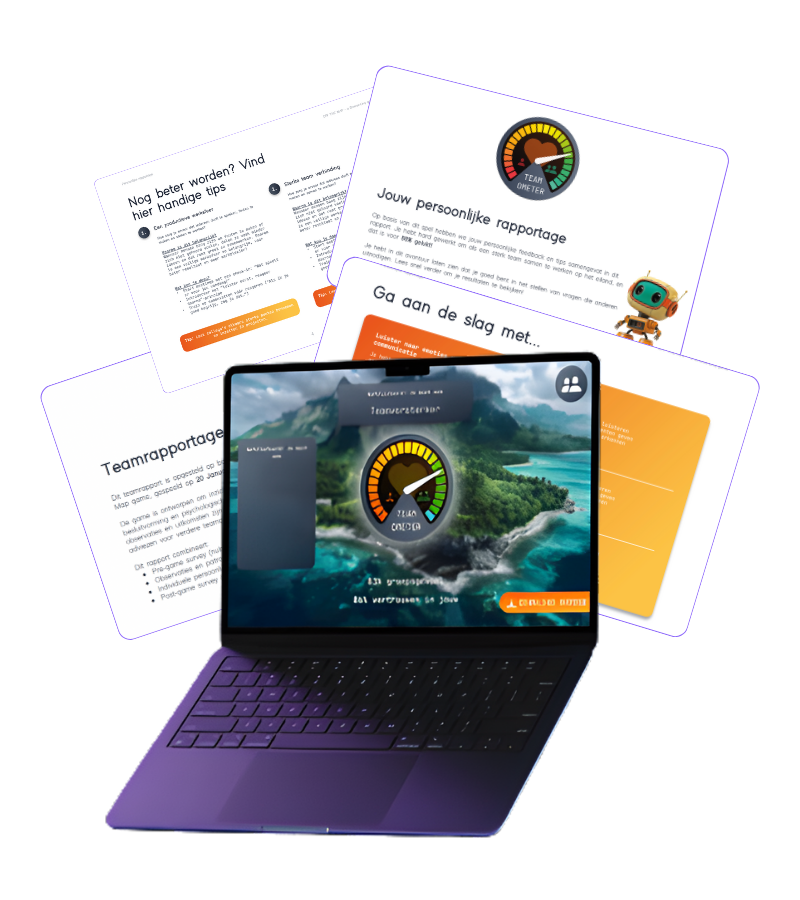
Off the Map is an AI-driven serious game that measurably maps out your team’s composition and collaboration dynamics. Over the course of one hour, participants navigate five online scenarios where they make decisions and engage with AI characters that respond to every choice.
Understanding the composition of your team
The game maps out each participant’s behavioral pattern based on eight team archetypes: from the connector who brings in quiet voices to the person who provides direction in times of uncertainty. These are not personality labels, but patterns as they manifest within the game. You instantly see which roles are strongly represented and which ones are missing.
Visibility in collaboration
The game measures how communication, decision-making, and critical feedback unfold under pressure. This makes it clearly visible where trust is strong, and where ideas and initiative get stuck.
Measurable results
A baseline measurement beforehand and a retrospective afterwards make the impact measurable. Every participant receives a personal report with concrete tools and action points. The organization receives an anonymized team report as a foundation for next steps.
Support & in-depth information
Off the Map can be used entirely digitally, both at an individual and team level. In addition, the program can be expanded with:
- A personal explanation of the results
- Team sessions or presentations to interpret insights together
- Guidance in implementing the action and development plan
- A follow-up process (PDCA cycle) to measure, secure, and further develop effects
Can also be used as onboardingtool
New employees first gain insight into their own communication and collaboration style: how they share information, deal with differences, and approach problems. This helps them become more aware of their own role and impact within a team context.
Based on that personal insight, they learn to recognize different perspectives and develop a shared language for collaboration and problem solving from day one. This makes joining a team more effective, accelerates integration, and increases the chance of successful collaboration, even before they are fully part of the existing team dynamics.
What organizations say about Off The Map
Off the Map is not standard e-learning for us, but an interactive AI experience that really makes you think.
While playing, you will encounter recognizable situations that invite reflection, awareness, and open dialogue about collaboration, inclusivity, and psychological safety.
The game feels surprisingly realistic and personal. The insights you gain are stimulating and practical at the same time: you recognize yourself and get tools that you can immediately apply in your daily work. What makes the difference for us is the combination of gaming experience with AI-driven, customized conversations. These help to interpret behavior, make it discussable, and actually change it.
The guidance provided during intake and (group) interviews, personal reports, and a concrete team development plan ensures that learning does not stop with the game, but is truly embedded in practice.
We experienced Off the Map as a learning intervention that sticks: recognizable, connecting, and directly applicable.
Off the Map is not standard e-learning, but an interactive AI experience that stimulates reflection, awareness, and dialogue around collaboration, inclusion, and psychological safety.
The game is realistic, personal, and stimulating, with insights that can be applied immediately.
What really sets it apart: the AI offers customized conversations that help interpret and improve behavior. Substantiated, concrete, and useful.
The guidance provided through intake interviews, group discussions, personal reports, and a team development plan ensures assurance and impact.
We experienced it as a learning intervention that sticks. Recognizable, connecting, and ready for practice.
We were involved in testing at an early stage, with explicit opportunities to provide feedback and shift focus. This not only created support, but also provided a learning experience that truly reflects the reality of the organization.
The strength of Off the Map lies in the combination of a strong game concept with personal depth. The game is stimulating and relevant for different levels within the organization—from operational teams to the boardroom. It is precisely this layered approach that makes it suitable for broad rollout without losing its edge.
What makes it extra motivating are the personal reports that come directly from the gaming experience. The link between gaming, reflection, and concrete insights creates ownership and naturally encourages reflection on behavior and collaboration. It's not theoretical, but practical and motivating.
I experience Off the Map as a learning intervention that motivates people, initiates conversations, and has a lasting impact. It is relevant, carefully constructed, and effective, with a strong balance between experience and content.
Average rating
8,6
They went before you
Shall we use the book as a starting point?
We are very curious about your insights and the questions it has raised for you.
Does Off the Map align with what your team needs right now? Let’s explore the possibilities together.